Topology vs Lattice: When to Choose Each
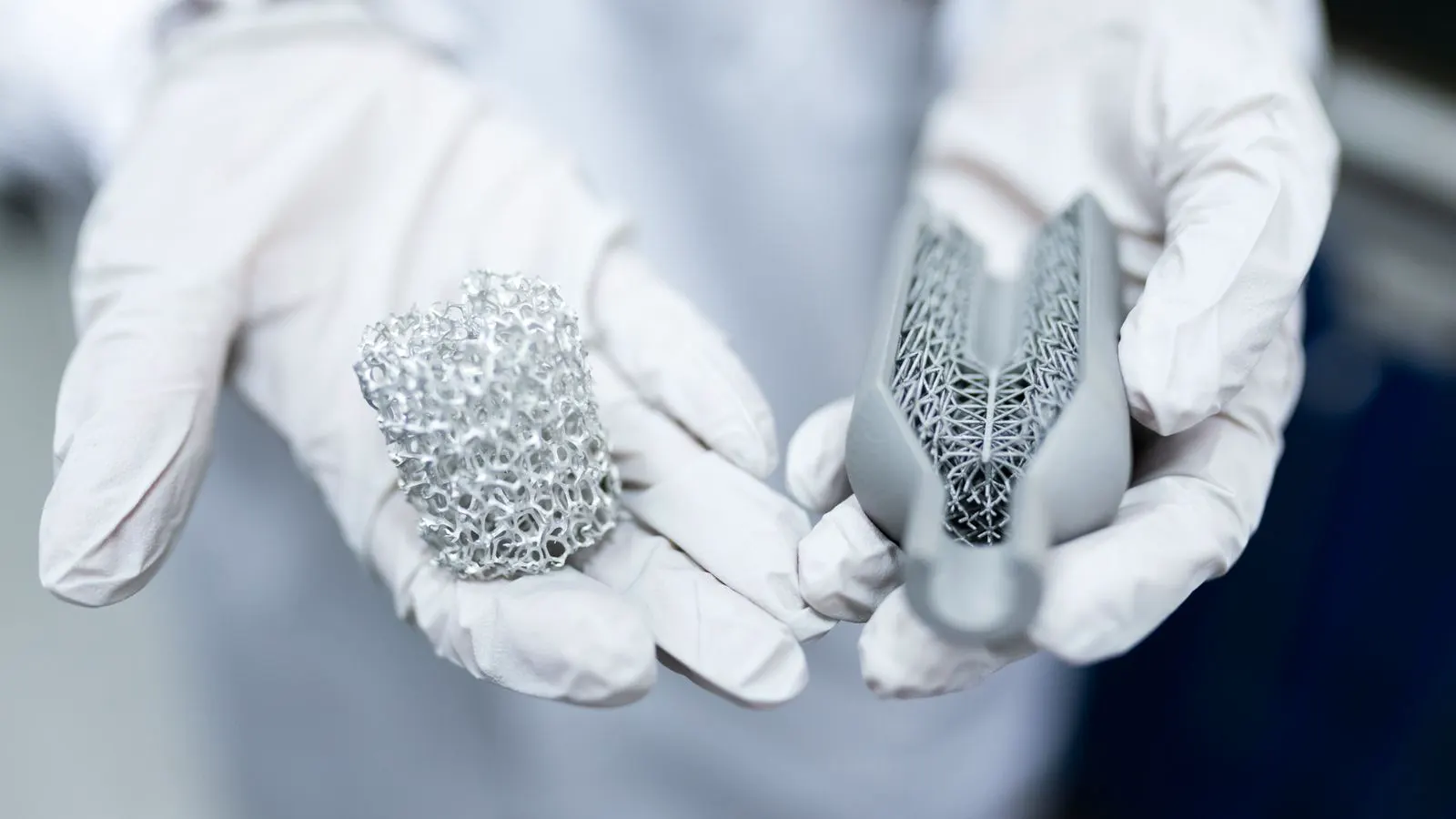
Topology optimization removes material from a defined load path, while lattice structures replace volume with a geometric pattern. Topology is better for high-stress functional parts; lattices are ideal for internal infill or surface texture. The choice depends on load behavior, build time, and post-processing requirements.
- Topology optimization reshapes the part to follow load paths.
- Lattice structures replace solid volume with a repeating geometric pattern.
- Use topology for high-stress functional components.
- Use lattices for internal infill or surface texture.
- Post-processing costs can be higher for complex optimized parts.
How Topology Optimization Works
Topology optimization is an algorithmic process that reconfigures material within a defined boundary. The software evaluates how forces move through a part and removes material where stress is low. The result is a shape that often looks organic and unconventional.
This approach is not simply about making a part lighter. It is about ensuring material remains where the structure needs it most. Engineers define loads, supports, and material properties. The algorithm then calculates the optimal geometry.
The output is typically a solid structure with complex curves. It may require additional processing or be directly printable, depending on the software and printer used.
How Lattice Structures Work
Lattice structures are repeating geometric patterns that replace solid material. Common examples include honeycomb, gyroid, and triangular lattices. They are applied to a volume of space rather than reshaping the entire part.
Lattices can be used as internal infill to reduce material usage. They can also be applied to the surface of a part to change stiffness, thermal properties, or aesthetics.
Unlike topology optimization, lattices do not necessarily change the overall shape of the component. They modify the internal or surface texture. The part maintains its original dimensions and form.
Performance Differences
The two techniques affect performance differently. Topology optimization changes the load path. It moves material to high-stress areas and removes it from low-stress areas. This can significantly improve strength-to-weight ratios.
Lattices modify stiffness and density. A gyroid lattice, for example, can provide high isotropy, meaning equal strength in all directions. A honeycomb lattice may be lighter but anisotropic, performing differently depending on the direction of force.
For parts subjected to bending or torsion, topology optimization often outperforms a simple lattice infill. The algorithm can place material exactly where bending stresses are highest. A uniform lattice may waste material in areas that do not experience high stress.
For parts subjected to uniform compression, a lattice can be sufficient. The repeating pattern distributes the load evenly. In these cases, the complexity of topology optimization may not provide a significant benefit.
Manufacturing Differences
Additive manufacturing makes both techniques possible, but the manufacturing implications differ. Topology optimization often creates complex geometries that are difficult to remove support material from. The organic curves can trap support material. This increases post-processing time and cost.
Lattices are generally easier to print. The repeating pattern supports itself in many orientations. However, small lattice cells can be difficult to print accurately. If the cell size is too small, the printer may not resolve the features correctly. This can lead to defects or weak points.
Build time is another factor. A topology-optimized part may have a lower material volume than a lattice-filled part. This can reduce build time and material cost. However, the complexity of the geometry may require slower printing speeds to ensure accuracy.
Lattices can be adjusted by changing the cell size. Smaller cells increase strength but use more material and take longer to print. Larger cells reduce weight but may lower stiffness. Engineers must balance these factors based on performance requirements.
Cost Considerations
The cost of topology optimization depends on the software license, computational resources, and post-processing requirements. The algorithm itself is fast on modern computers. However, the resulting geometry may require more support material and longer cleanup.
Lattice structures have a lower computational cost. They are generated by software without iterative optimization. The main cost is in the printing process. If the lattice cells are small, the build time increases. If the cells are large, the part may not meet stiffness requirements.
Post-processing is a major cost driver for both. Topology-optimized parts often have complex internal cavities. Removing support material can be difficult. Lattice parts may require inspection to ensure the pattern printed correctly. Both require quality control to verify performance.
When to Pick Each
Use topology optimization when the part is subject to complex loads. This is common in aerospace, automotive, and medical devices. The part must be as light as possible without sacrificing strength. The load paths are known and can be defined in the software.
Use lattice structures when the part needs to maintain its original shape. This is common in housings, brackets, and consumer products. The lattice can reduce weight and cost while keeping the external dimensions unchanged. It is also useful for creating surface textures that improve grip or reduce friction.
A hybrid approach is also possible. You can use topology optimization to shape the main structure and lattices for the internal infill. This combines the strength of a load-optimized shape with the material savings of a lattice. The complexity increases, but the performance can be excellent.
Comparison Table
| Option | Best for | Limitations |
|---|---|---|
| Topology Optimization | High-stress functional parts, aerospace, medical devices | Complex geometry, higher post-processing cost, requires accurate load data |
| Lattice Structures | Housings, brackets, internal infill, surface texture | Uniform stiffness, may not follow specific load paths, small cells can be hard to print |
| Hybrid Approach | Parts needing both shape optimization and material savings | Complex design process, requires expertise in both techniques, higher software cost |
| Solid Part | Small parts, high-load joints, no weight requirement | Maximum material use, highest cost, no weight savings |
| Shell Structure | Large parts with thin walls, non-structural components | Low stiffness, prone to deformation, not suitable for high loads |
Final Guidance
The decision between topology optimization and lattice structures depends on the part’s function, loads, and cost constraints. Topology optimization is a powerful tool for high-performance parts. It requires careful analysis and accurate load definition. The resulting part will be lighter and stronger, but it will be more complex to manufacture.
Lattices are a simpler and more cost-effective solution for weight reduction. They are ideal for parts where the external shape must remain unchanged. They are also useful for creating surface features that improve performance.
Engineers should start by defining the performance requirements. What are the loads? What is the weight target? What is the budget? Then, evaluate which technique meets those requirements. In many cases, a combination of both techniques provides the best balance of performance and cost.
Always simulate the part after design. The software predictions are a starting point. Real-world manufacturing can introduce variations. Testing the final part ensures it meets the required performance standards.
Frequently asked questions
Is topology optimization only for metal parts?
No, topology optimization can be applied to any material used in additive manufacturing. It is most common in metal due to the high performance requirements, but it is also used in plastic and ceramic printing.
Can I use a lattice for the entire part?
Yes, you can print a part entirely with a lattice structure. However, this may limit the stiffness and strength of the part. It is usually better to use a solid core or topology-optimized shell with lattice infill.
How accurate is the topology optimization software?
The software provides a good approximation of the optimal shape. However, the results depend on the accuracy of the input data, including loads, materials, and constraints. Simulation and testing are still required to verify performance.
Are lattices more expensive to print?
Not necessarily. Lattices can use less material than solid parts, which reduces cost. However, small lattice cells can increase build time. The overall cost depends on the cell size, printer type, and post-processing requirements.
Can I change the lattice pattern after printing?
No, the lattice pattern is fixed during printing. If you need a different pattern, you must reprint the part. The pattern is defined in the slicing software before the print begins.