The Future of Industrial Polymer AM: Emerging Trends in 2026
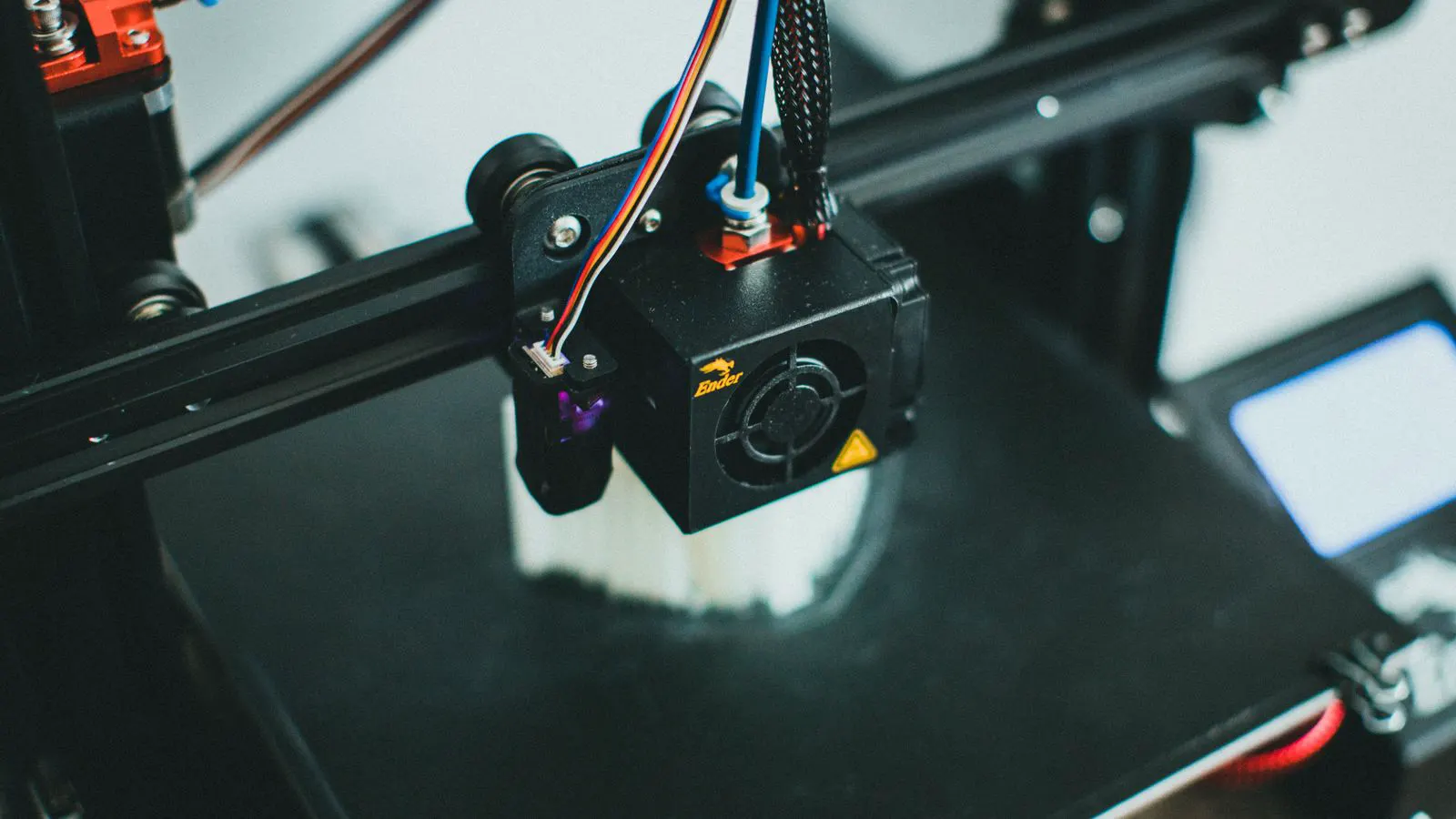
Industrial polymer AM is shifting toward higher throughput, advanced materials, and integrated automation. Buyers should plan for multi-material printing, hybrid tooling, and tighter quality controls to maintain competitiveness.
- Production lines are integrating automated handling and inspection to reduce manual intervention.
- Material selection is expanding beyond standard engineering plastics to include high-temperature and chemically resistant resins.
- Hybrid workflows combine 3D printed components with conventional machining for final dimensional accuracy.
- Quality documentation is becoming more automated through built-in sensors and digital thread tracking.
- Buyers should prioritize machine flexibility and software compatibility when evaluating new systems.
What is changing in material selection for polymer AM?
The material palette for industrial polymer AM is expanding beyond the standard engineering resins that have dominated the market for years. ABS, Nylon, and PETG remain the workhorses for many facilities, but the focus is shifting toward materials that meet tighter specification requirements. High-temperature resins are gaining traction for applications in automotive tooling and electronics where heat resistance is a hard constraint. For example, a cooling manifold for a battery pack may need to withstand sustained temperatures that exceed the service limits of standard Nylon. A high-temperature resin allows the engineer to design the part with larger cross-sections or thinner walls, optimizing for weight and heat dissipation.
Chemical resistance is another area of growth. Resins formulated to withstand solvents, fuels, and aggressive cleaning agents are being tested for use in valve bodies, pump components, and chemical processing fixtures. These materials allow engineers to replace metal parts in non-structural roles, reducing weight and cost without compromising performance. A common application is the fabrication of custom gaskets or seals for hydraulic systems. By selecting a resin with specific resistance to the working fluid, the engineer can reduce the frequency of replacement and lower maintenance downtime.
Biocompatible and food-grade resins are also seeing increased interest. Medical device companies and food equipment manufacturers are evaluating these materials for rapid prototyping and low-volume production runs. The key consideration here is not just the material itself, but the certification process. Buyers must verify that the resin lot, the printer process, and the post-processing steps all meet the relevant regulatory standards for their specific application. For a medical device, this might involve verifying that the resin has passed biocompatibility testing and that the cleaning process does not leave residues. For a food contact part, the material must be certified for direct contact with food, and the processing equipment must be designed to prevent contamination.
How is automation reshaping the production workflow?
Manual handling of resin parts is a bottleneck. After exposure, parts must be washed, cured, and supported. This process is slow and prone to operator error. The trend moving forward is full-cycle automation. Integrated washing and curing stations are becoming standard features on high-end systems. Some facilities are now deploying robotic arms that pick parts directly from the build platform and move them to inspection stations. This automation changes the economics of the operation. It allows printers to run unattended for longer periods, increasing the effective utilization rate of the machine. It also reduces the need for specialized labor. A technician can now manage multiple printers without being tied to the wash tank. The shift is from a craft-based workflow to a data-driven production line.
Integration with computer-aided design and enterprise resource planning systems is another critical development. When a part design is released, the system can automatically generate the print file, reserve machine time, and track the material lot. This digital thread ensures that traceability is built into the process rather than added as a manual step afterward. For a high-volume production run, this integration allows the quality team to verify that the correct resin lot was used for each part, even if the part was printed days earlier. It also simplifies the process of recalling a specific batch of parts if a defect is found in the field.
What role do hybrid workflows play in industrial applications?
Pure additive manufacturing is not the right answer for every part. Many industrial components require a level of surface finish, dimensional tolerance, or mechanical strength that current polymer printing cannot deliver on its own. Hybrid workflows combine 3D printing with traditional subtractive methods. A complex internal lattice structure is printed, and then the external surfaces are machined to a precise tolerance. This approach is particularly effective for tooling. Soft tooling for injection molding is often printed in a high-detail resin and then milled to create the final mold cavity. The printed part provides the complex geometry, while the milling ensures the mating surfaces are flat and aligned. It also applies to end-use parts where only a small portion of the geometry needs to be highly precise.
Buyers should evaluate whether their facility has the space and equipment for hybrid operations. Adding a CNC mill to a print farm is a significant capital investment. However, for high-value applications where part failure is costly, the hybrid approach often justifies the expense. It allows companies to use the speed of additive manufacturing where it shines and the reliability of machining where it is required. For example, a complex bracket for a machine frame might be printed with a lattice structure to reduce weight, and then the mounting surfaces are machined to ensure perfect flatness and alignment with the base.
How are quality controls evolving in industrial polymer AM?
Quality control in polymer AM is moving from post-failure analysis to in-process monitoring. Older systems relied on visual inspection after the print was finished. Modern systems use sensors to monitor the exposure process in real time. Cameras can detect defects in the part as it builds layer by layer. Thermal sensors can track the temperature of the resin tank and the build platform, flagging any drift that might affect part integrity. This data is being integrated into quality management systems. Each print run generates a digital record of the process parameters, environmental conditions, and sensor readings. If a part fails in the field, engineers can review the data from that specific print to identify the root cause. This shifts the focus from finding the problem to preventing it.
The challenge for buyers is data management. A single printer can generate thousands of data points per day. Without a clear strategy for storing and analyzing this data, the information is useless. Companies need to ensure that their IT infrastructure can handle the data load and that the relevant personnel have the skills to interpret it. For instance, a thermal sensor might flag a temperature drift of 2 degrees Celsius during a print run. Without context, this data point is meaningless. With a proper analysis system, the engineer can correlate this drift with a specific part defect and adjust the process parameters to prevent recurrence.
What impact does multi-material printing have on design?
Multi-material printing is changing how engineers approach part design. Instead of assembling multiple components, a single build can now incorporate different materials in one go. This allows for parts that have different stiffness, flexibility, or thermal properties in different areas. A single housing can have a rigid shell and a flexible gasket area, printed in one continuous piece. The main limitation is the build area. Multi-material printers often have smaller build volumes than single-material machines because they need space to store and dispense the different materials. This means they are best suited for small to medium-sized parts, not large structural components.
The software required for multi-material printing is more complex. Engineers must define which areas of the part will use which material. They must also manage the transition zones between materials to prevent delamination. This requires a higher level of expertise in the design phase. Training and support from the software provider are critical when adopting this technology. For example, an engineer designing a pump impeller might use a rigid material for the main body and a flexible material for the vanes to absorb vibration. The software must ensure that the transition between the two materials is smooth and strong, or the part will fail during operation.
How should buyers prepare for these trends?
The market for industrial polymer AM is moving from experimentation to production. The days of using 3D printing only for one-off prototypes are ending for many organizations. The focus is now on integrating the technology into the core manufacturing process.
Buyers should start by mapping their current workflow. Identify the steps that are currently manual and time-consuming. Look for opportunities to automate these steps. Evaluate whether your facility has the space for automated washing and curing. Check if your IT team can handle the data from in-process monitoring.
Material selection is another area to focus on. Work with your material supplier to identify resins that meet your specific application requirements. Do not assume that a standard engineering resin will work for a chemical processing part. Ask for technical data sheets and test reports.
Finally, consider the total cost of ownership. The purchase price of the machine is only one part of the equation. Factor in the cost of materials, post-processing, maintenance, and software licensing. A more expensive machine with better automation and software integration may have a lower long-term cost than a cheaper machine that requires more manual labor and has less built-in quality controls.
The future of industrial polymer AM is not about replacing traditional manufacturing. It is about adding a new capability to the production toolbox. Companies that plan for these shifts early will be better positioned to deliver parts faster and with higher quality.
Frequently asked questions
What is the main difference between industrial polymer AM and consumer 3D printing?
Industrial systems are built for higher reliability, larger build volumes, and automated post-processing. They use engineering-grade materials and are integrated into production workflows, unlike consumer printers which are typically for prototyping.
Is resin stereolithography still relevant for production parts?
Yes, but its role is narrowing. It is best suited for small to medium parts that require high detail and surface finish. For larger or higher-volume applications, selective laser sintering or fused deposition modeling may be more cost-effective.
How long does it take to implement an automated polymer AM workflow?
Implementation time varies by facility size. A small team might take a few months to set up automated washing and curing. Larger production lines with full robotic integration and software setup can take over a year.
What are the main risks of multi-material printing?
The main risks are delamination at material interfaces and limited build volume. The software complexity also means that design errors are harder to detect before printing.
Should I buy a new printer or upgrade my existing one?
If your current machine is more than five years old, it is likely not compatible with the latest automation and software features. Upgrading might not be possible. Buying new is often the better option for long-term return on investment.