Cost and Lead Time for Metal AM Post-Processing
Metal am post processing cost depends on material, part size, and finishing methods. Lead time is driven by batch size and required tolerances. Use a detailed RFQ to compare quotes fairly and avoid hidden fees in industrial manufacturing.
- Metal am post processing cost varies widely based on material, part complexity, and the specific finishing operations required.
- Lead time is often longer than printing time due to batch processing, heat treatment, and inspection requirements.
- A detailed RFQ specifying tolerances and surface finish needs prevents misaligned quotes and hidden fees.
- Comparing quotes requires looking at the total cost of ownership, including rework, inspection, and material waste.
- Standardizing part designs can significantly reduce both post-processing costs and turnaround times for production runs.
What Drives the Cost of Metal AM Post Processing
Metal AM post processing cost is rarely a single line item. It is a stack of variables that compound as parts move through the finishing chain. The base print cost is only the starting point. After the build is complete, parts require support removal, heat treatment, machining, and inspection before they reach the customer. The total expenditure often exceeds the cost of the powder and machine time by a significant margin, particularly when dealing with high-performance alloys or complex geometries.
The primary driver is the material. High-alloy nickel, titanium, and superalloys cost more to process than stainless steel or maraging steel. The thermal properties of these materials also dictate the energy required for heat treatment. A part made from a refractory alloy may require multiple thermal cycles to relieve stress, increasing the cost per part. For example, a titanium bracket might need a solution heat treatment followed by an aging cycle to achieve the desired mechanical properties. Each cycle involves loading the furnace, heating to a precise temperature, holding for a set duration, and cooling. The labor and energy costs accumulate with each cycle. In contrast, a stainless steel part might only require a single stress-relief anneal. The difference in material science translates directly into a difference in the post-processing budget.
Part geometry and size are the second major factors. Large parts take longer to machine. Thin features are harder to inspect and finish without damage. Complex internal geometries may require multiple setup angles for CNC finishing. The more complex the part, the more labor and machine time are required. Consider a gas turbine blade. It has thin airfoils, internal cooling channels, and a root that must be machined to a precision fit. The initial print leaves the surface rough, and the thin airfoils require careful, slow machining to avoid deflection or burn. The internal channels might even need to be machined after the part is oriented in the machine, requiring additional clamping and setup. A simple, flat bracket with no internal channels can be machined in a fraction of the time. The volume of material removed per hour is a key metric here. If a part requires removing a large amount of stock, the CNC machine spends hours cutting. If the part is near-net shape, the machine spends minutes deburring and finishing.
How Lead Time Is Determined in the Finishing Chain
Lead time for metal AM post processing is often underestimated. Printing a batch of parts might take two days. Post-processing can take weeks. The timeline is dictated by the slowest step in the sequence, which is usually heat treatment or machining. These operations cannot be parallelized easily. A part must be fully heat treated before it can be machined to final dimensions, as machining before heat treatment leads to distortion and requires re-machining later.
Heat treatment requires specific temperature and time profiles. Parts must cool down and be inspected between cycles. This creates a bottleneck that cannot be rushed without risking part failure. For instance, a high-alloy superalloy component might require solution treatment at a high temperature, followed by rapid quenching, and then a secondary aging treatment at a lower temperature. Each step has a fixed duration. If a furnace is occupied, parts must wait. This waiting time adds to the lead time without adding value to the part.
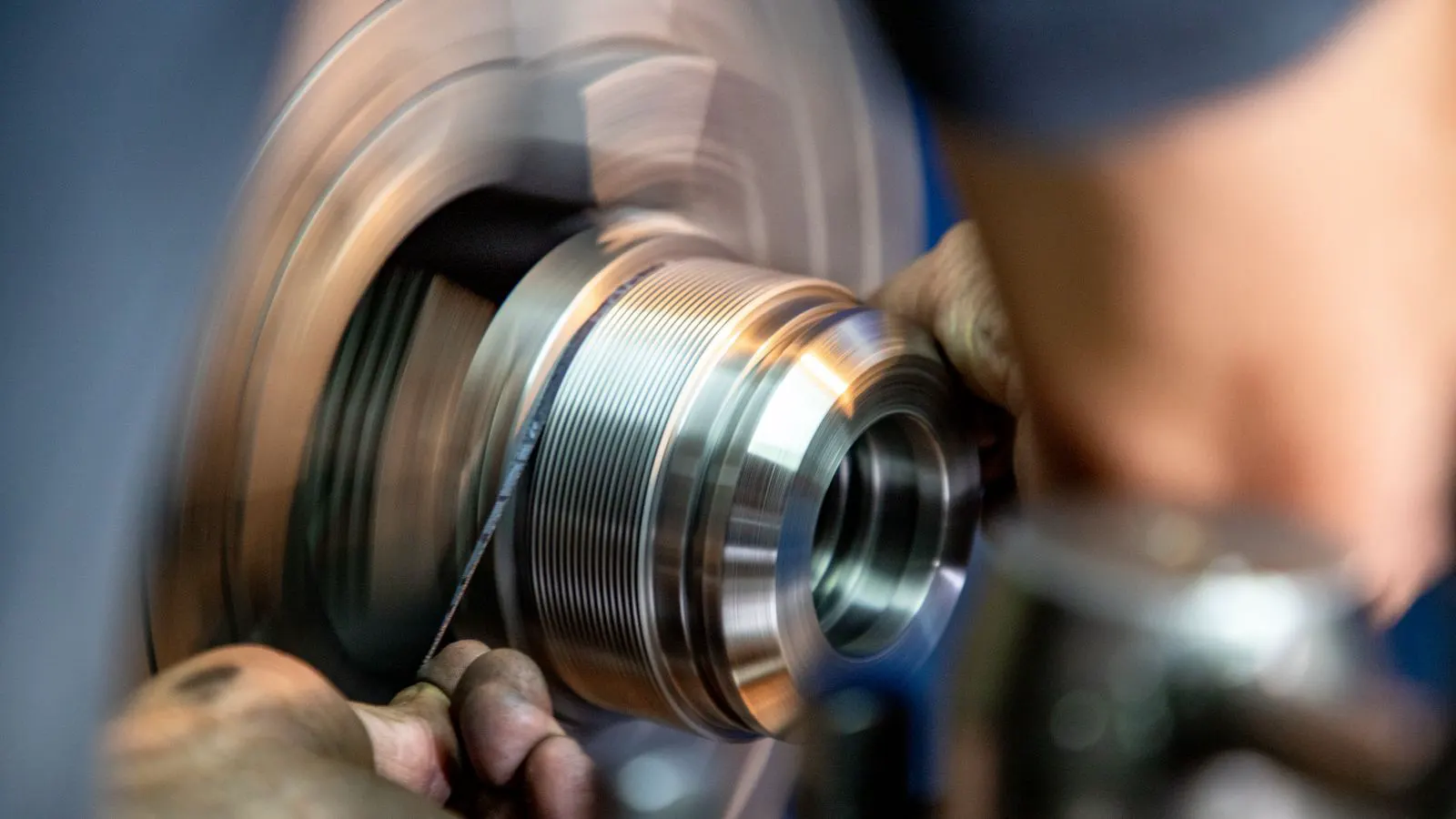
Machining adds time based on the volume of material to be removed. A part that needs 100 millimeters of material removed will take significantly longer than one needing only 5 millimeters. The complexity of the toolpaths also matters. A part with many small, deep pockets requires smaller, slower tools and more frequent tool changes. A part with large, flat surfaces can be machined with large, fast tools that remove material quickly. The operator must program the machine, which takes additional time. A complex part might require hours of CAM programming before the machine even starts cutting.
Batch size also affects lead time. Small batches often carry higher per-unit costs because setup times are not amortized. However, they may move through the queue faster than large production runs. Large batches require dedicated machine time and can be scheduled for longer slots, reducing the cost per part but extending the turnaround time for individual units. A single prototype part might be processed in a few days, while a batch of five hundred identical parts might take several weeks to complete, even if the per-unit cost is lower.
How to Write a Clear RFQ for Better Quotes
Vague requests lead to inaccurate quotes. When writing a Request for Quote for AM post processing, you must specify the exact operations required. Do not just say “finish the part.” Break down the requirements into discrete steps. Ambiguity in the scope of work is the leading cause of disputes and price changes.
Start with the material and part number. Include the CAD file and the print orientation used during the build. Specify the required surface finish, such as Ra value, and any critical dimensions that need to be held. List the heat treatment requirements, including the specific standard if one applies. For example, if the part is made from Inconel 718, specify that it must be solution treated and aged per the material supplier’s recommended heat treatment curve. If the part is for a medical device, specify the surface finish Ra value and the need for a dimensional report.
Include the quantity and the required delivery date. State whether the parts are for prototype or production use. Provide any inspection requirements, such as dimensional reports or coating tests. A clear RFQ allows the supplier to price the work accurately and reduces the number of back-and-forth emails. It also helps the supplier allocate the right resources. If you need a part for a flight test in three weeks, the supplier needs to know that immediately to prioritize the job.
How to Compare Quotes Fairly
Comparing quotes from different suppliers is difficult when the scope of work differs. One supplier may include support removal and heat treatment in the base price, while another may charge for those separately. To compare fairly, you must normalize the scope. This requires a detailed breakdown of the costs.
Create a table that lists each operation for every quote. Check if support removal is included. Check if heat treatment is included. Check if machining is included. Check if inspection and reporting are included. If a supplier quotes a lower price, ask what is excluded. A lower number often means higher hidden costs or a higher risk of rework. For example, if one supplier quotes a lower price but excludes heat treatment, you must factor in the cost of that operation. If the heat treatment is critical for part performance, excluding it is a red flag.
Also, ask about the quality control process. A supplier that performs 100% inspection may charge more upfront but save money in the long run by preventing defective parts from reaching the customer. A supplier that only does spot checks may be cheaper but riskier. The total cost of ownership is more important than the initial invoice. If a part fails in the field due to a defect that could have been caught by a simple dimensional check, the cost of the failure far exceeds the cost of the inspection.
Cost Drivers in Metal AM Finishing
The following table lists the main cost drivers for metal am post processing. Use this as a checklist when reviewing quotes or planning your budget.
| Cost Driver | Description | Impact on Price |
|---|---|---|
| Material Type | High-alloy materials cost more to process and heat treat. | High |
| Part Complexity | Thin features and large volumes of material increase machining time. | High |
| Heat Treatment | Multiple thermal cycles increase energy and labor costs. | Medium to High |
| Surface Finish | Tighter Ra values require more passes or polishing. | Medium |
| Inspection | 100% inspection or coating tests add labor and equipment time. | Medium |
| Batch Size | Small batches have higher setup costs per unit. | High |
How to Reduce Costs and Lead Times
Reducing costs and lead times requires action at the design stage. Standardizing part features and tolerances reduces the complexity of post-processing. If a part can be machined from a solid block instead of a complex printed geometry, the cost may drop significantly. Design for AM, but also design for the finishing process. Avoid features that are difficult to machine, such as deep undercuts or very thin walls that are prone to deflection.
Also, consider the print orientation. Some orientations require less support material and less post-processing. A part printed with a favorable orientation may need less support removal and less machining. Work with your AM provider to find the best orientation for your specific part. For example, printing a part with the critical surface facing up may reduce the need for machining on that surface. Printing a part with the root of a blade facing down may reduce the need for support removal on the root, which is often a critical fit surface.
Finally, plan your batches strategically. If you have multiple parts that require the same heat treatment, group them together. This reduces the number of thermal cycles and lowers the cost per part. It also simplifies the scheduling process and can reduce lead time. If you have parts that require different heat treatments, consider if they can be processed in the same furnace. Sometimes, running a furnace for a single part is inefficient. Grouping parts with similar thermal requirements can improve efficiency.
Common Mistakes to Avoid
Many buyers make the same mistakes when budgeting for metal AM post processing. The most common is underestimating the cost of heat treatment. Buyers often focus on the print cost and the machining cost, but forget the thermal cycles. Heat treatment is often the most expensive step in the post-processing chain, especially for high-alloy materials. A single part might require two or three heat treatment cycles, each with significant labor and energy costs.
Another mistake is not specifying the surface finish. If you do not state the required Ra value, the supplier may assume a standard finish that is not good enough for your application. This leads to rework and delays. For example, if you need a surface finish of Ra 0.8 microns for a seal, but the supplier provides Ra 3.2 microns, the part will not function correctly. You will have to send it back for re-machining, which adds cost and time.
A third mistake is not asking about the inspection process. If you do not require a dimensional report, you may not know if the part is within tolerance until it is too late. Always specify the inspection requirements in your RFQ. Specify which dimensions need to be measured and how. For example, specify that the root diameter needs to be measured with a CMM and that a report should be provided. This ensures that the supplier performs the necessary checks and provides the documentation you need.
Conclusion
Metal AM post processing is a critical part of the manufacturing process. It determines the final quality and performance of the part. By understanding the cost drivers and lead time factors, you can plan your budget and timeline more effectively. Use a clear RFQ and compare quotes fairly to ensure you get the best value. The goal is to align the design, the process, and the expectations so that the part meets the requirements without unnecessary cost or delay.
Frequently asked questions
What is the typical lead time for metal AM post processing?
Lead time varies by part complexity and batch size. Simple parts may take a few days, while complex parts with multiple heat treatment cycles can take several weeks.
How does material choice affect post-processing cost?
High-alloy materials like titanium and nickel superalloys cost more to process due to higher material cost and energy requirements for heat treatment. Stainless steel is generally less expensive to process.
Can I reduce post-processing costs by changing the part design?
Yes. Simplifying the geometry, standardizing tolerances, and choosing a favorable print orientation can reduce the need for support removal and machining, lowering costs.
What should I include in my RFQ for post-processing?
Include the part number, material, CAD file, print orientation, required surface finish, heat treatment specifications, quantity, and inspection requirements.
How do I compare quotes from different suppliers?
Normalize the scope of work by listing each operation for every quote. Check if support removal, heat treatment, and inspection are included. Ask about quality control processes to understand the total cost of ownership.