Explainer: Annealing vs Laser Annealing for PBF Parts
Conventional annealing uses ovens for uniform stress relief, while laser annealing applies localized heat. Buyers must weigh cost, part size, and tolerance requirements. This explainer clarifies technical differences and sourcing implications for metal AM parts.
- Conventional annealing relieves residual stress across entire parts using controlled oven cycles.
- Laser annealing applies targeted thermal input to specific areas, reducing energy use.
- Sourcing decisions depend on part size, material, tolerance, and volume.
- Both methods require validated parameters to ensure mechanical properties and dimensional stability.
What Is PBF Annealing and Why It Matters
Residual stress builds during powder bed fusion. Each layer cools rapidly, creating internal tension in the finished part. If that stress is not managed, components can distort during machining or fail in service. PBF annealing is the thermal process that relieves this stress. It is a standard step in metal AM post-processing.
Two approaches dominate the market. Conventional annealing places parts in a controlled atmosphere oven. Laser annealing directs a focused beam at the part surface or selected zones. Both methods reduce residual stress, but they operate on different physical principles. The choice affects lead time, cost, and part performance.
How Conventional Annealing Works
Conventional annealing uses a sealed oven with precise temperature control. Parts sit on racks inside the chamber. The oven heats the entire part uniformly. The temperature rises slowly to a target point, holds for a set time, then cools gradually. The rate of heating and cooling is critical. Too fast, and stress remains. Too slow, and throughput suffers.
The atmosphere inside matters as well. Many processes use inert gas or vacuum to prevent oxidation. Parts made from stainless steel, titanium, or nickel alloys require specific atmospheric conditions to avoid surface contamination. The entire part experiences the same thermal cycle. This makes conventional annealing well suited to larger components or batches of similar parts.
The process is mature. Engineers understand the material behavior well. Validation data exists for many alloys. However, the energy cost scales with part size. A small bracket and a large structural component both require the same oven cycle. The larger part absorbs more energy, but the time remains the same.
How Laser Annealing Works
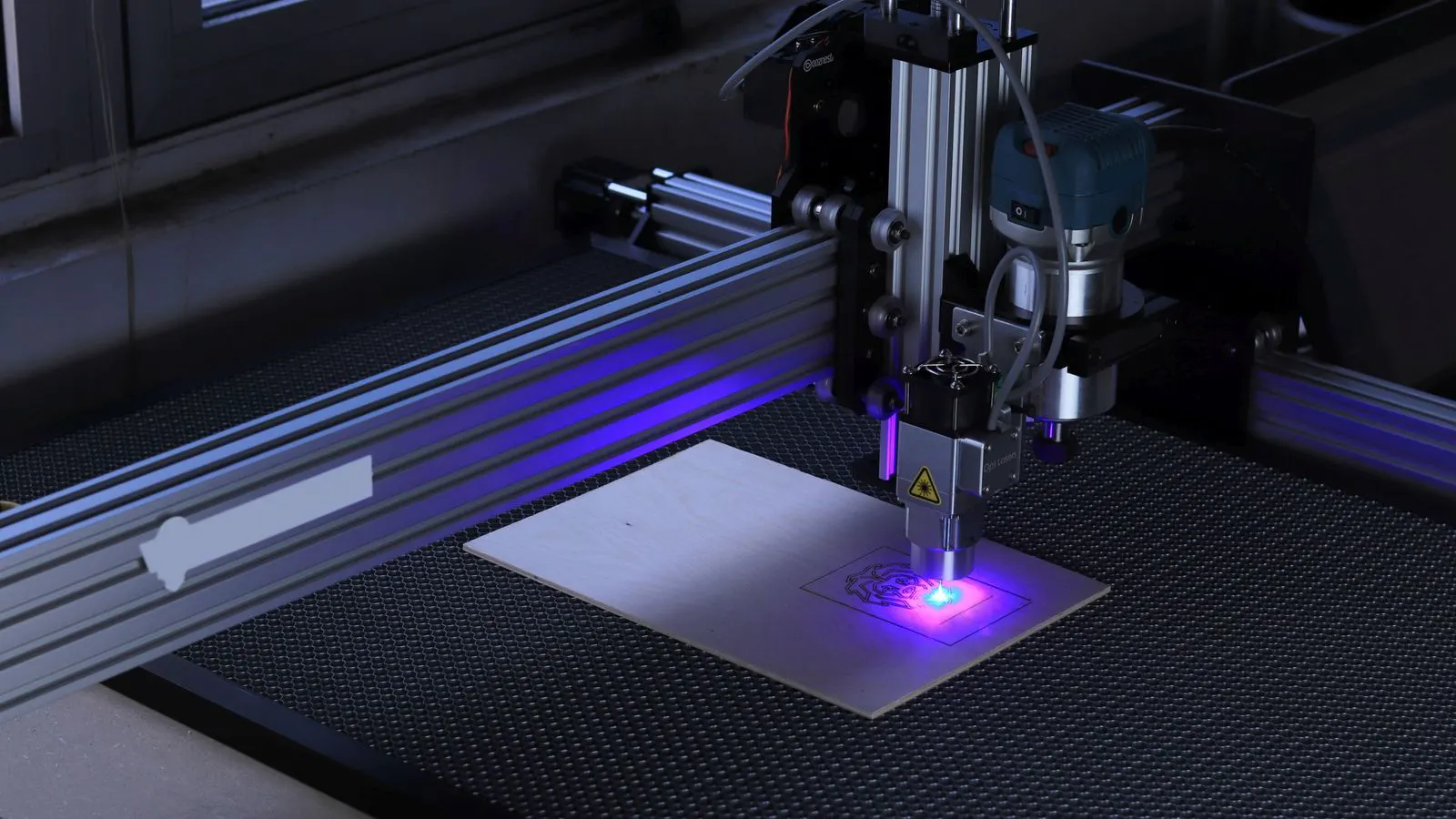
Laser annealing uses a focused beam of light to heat the part surface. The laser moves across the component in controlled paths. It raises the temperature in a small area to a specific level, then moves on. This creates a localized thermal gradient. The surface cools as the laser passes, while the interior remains cooler.
This targeted approach changes the physics. Only the heated zone experiences stress relief. The surrounding material stays cool. This can reduce overall energy consumption. It also allows engineers to treat only high-stress areas, such as thin walls or complex geometries. Some parts may not require full-volume annealing.
Laser annealing is often paired with selective heat treatment. Engineers map stress concentrations from simulation or test data. The laser targets those zones. This reduces cycle time for large parts where only specific regions need treatment. The process requires precise control of power, speed, and beam diameter.
Technical Differences That Affect Sourcing
The technical differences between the two methods create distinct sourcing considerations. Buyers must evaluate part size, material, volume, and quality requirements. The following table summarizes the key contrasts.
| Factor | Conventional Annealing | Laser Annealing |
|---|---|---|
| Heat Application | Uniform, full part | Targeted, localized zones |
| Cycle Time | Fixed, independent of size | Variable, depends on area treated |
| Energy Use | Higher for large parts | Lower for targeted treatment |
| Atmosphere Control | Sealed chamber required | Often open air or inert flow |
| Scale | Suits batch processing | Suits selective or single part |
| Validation | Extensive material data | Emerging, part specific |
Conventional annealing is easier to scale for high volume. An oven can hold many racks at once. The process is standardized. A supplier can quote a fixed rate per hour or per part. Laser annealing scales differently. Cost depends on the area treated and the complexity of the laser path. A part with a large surface area may cost more than expected if the laser must cover many zones.
Cost and Lead Time Considerations
Cost drivers differ between the two methods. Conventional annealing costs are driven by oven time and capacity. If the oven runs continuously, the marginal cost per part drops. This favors high volume production. Lead time is predictable. Parts go in, heat, cool, and come out. The schedule is fixed.
Laser annealing costs are driven by laser time and setup. Each part may require unique path planning. This adds engineering time. For low volume or prototyping, the setup cost may be higher per unit. For high volume, the per-part cost can drop if the laser path is optimized. Lead time can be shorter for large parts where only small zones need treatment.
Buyers often underestimate the cost of validation. Both methods require testing. Conventional annealing has more historical data. New alloys or part geometries still need qualification. Laser annealing requires more careful parameter selection. If a supplier offers laser annealing, ask for validation data on similar materials. Request test reports that show residual stress measurements before and after treatment.
A Worked Example in Plain Words
Consider a titanium bracket used in an aerospace application. The bracket is small, about the size of a matchbox, but it has thin walls and complex internal structures. Residual stress is high in the thin sections.
If a buyer uses conventional annealing, the bracket goes into an oven with fifty other parts. The oven heats to a specific temperature for a set time. All fifty parts receive the same treatment. The process takes several hours. The bracket comes out with uniform stress relief. The cost is low because the oven was already running.
If a buyer uses laser annealing, the technician maps the high stress zones in the thin walls. The laser treats only those areas. The rest of the bracket stays cool. The process takes minutes. The energy use is lower. However, the technician must plan the laser path carefully. If the path is wrong, the stress relief is uneven. For a small part like this, laser annealing may be faster but requires more engineering attention.
The choice depends on the production run. If the buyer orders ten thousand brackets, conventional annealing wins on cost. The oven runs continuously. If the buyer orders ten brackets with unique geometries, laser annealing may be faster. The setup cost is amortized over fewer parts.
Quality Checks and Validation
Both methods require verification. Buyers should not assume that heat treatment guarantees quality. The process parameters must match the material and part design.
For conventional annealing, check the temperature profile. The oven should log the actual temperature inside the chamber, not just the setpoint. Verify that the atmosphere is correct. Check for surface contamination. Oxidation or discoloration can indicate atmosphere failure.
For laser annealing, check the power and speed settings. The laser path should be documented. Verify that the treated zones match the intended stress relief areas. Look for surface defects. Laser annealing can cause thermal distortion if the beam is too intense. It can also create a heat affected zone that changes surface hardness.
In both cases, residual stress measurement is key. Suppliers should offer X-ray diffraction or neutron diffraction testing. These methods measure stress without damaging the part. Buyers should request data showing the reduction in residual stress. The target reduction varies by material and application. A general rule is that significant stress relief improves dimensional stability during machining.
Common Mistakes to Avoid
Buyers often make three mistakes when selecting an annealing method.
First, they assume larger parts always need conventional annealing. A large part with low stress concentrations may benefit from targeted laser treatment. The part size is not the only factor. Stress distribution matters.
Second, they ignore atmospheric control for conventional annealing. Without a proper inert or vacuum chamber, surface quality suffers. Oxidation can require additional surface treatment. This adds cost and time.
Third, they skip validation for laser annealing. Because laser annealing is newer in some applications, suppliers may offer it without full validation. Buyers must require test data. Do not rely on generic claims. Ask for specific results on your material and part geometry.
Final Considerations for Sourcing
Sourcing PBF annealing requires a clear understanding of your part requirements. Define the material, size, and stress profile. Determine the volume. Set the quality criteria. Then compare suppliers who offer both methods.
Ask suppliers for their approach to validation. Request sample test reports. Inquire about their equipment. A mature supplier will have calibrated ovens and stable laser systems. They will document their processes and provide traceable data.
The goal is not to choose one method over the other. The goal is to match the method to the part. Conventional annealing offers uniformity and scale. Laser annealing offers precision and efficiency. Both are valid. The right choice depends on your specific engineering and production needs.
Frequently asked questions
Can laser annealing replace conventional annealing for all PBF parts?
No. Laser annealing is best for targeted stress relief in specific zones. Conventional annealing remains preferred for uniform stress relief across entire parts, especially in high-volume batches.
What materials are suitable for laser annealing?
Most metallic AM materials can be treated with laser annealing, including titanium, stainless steel, and nickel alloys. However, validation is required for each material and part geometry.
How does atmosphere control affect conventional annealing?
Atmosphere control prevents oxidation and contamination. Inert gas or vacuum chambers are standard. Failure to control the atmosphere can degrade surface quality and require additional finishing.
What is the typical residual stress reduction target?
Targets vary by material and application. Buyers should define their target based on dimensional stability and mechanical performance requirements. Test data should be provided for validation.
How do I verify that a supplier's annealing process is effective?
Request test reports showing residual stress measurements before and after treatment. Ask for temperature profiles, atmosphere logs, and surface inspection records. Require traceable data for each lot.