Additive Post Processing Explained for Industrial Buyers
Additive post processing refers to the manufacturing steps performed after a part leaves the build chamber. It removes supports, cleans the part, and restores or improves mechanical properties. For industrial buyers, understanding these methods is critical to ensuring parts meet strict dimensional and performance requirements.
- Additive post processing includes support removal, cleaning, heat treatment, and surface finishing.
- Different materials and applications require different post-processing sequences.
- Choosing the right finishing method directly affects part quality, cost, and lead time.
- Buyers should specify post-processing requirements early in the sourcing process.
- Combining multiple steps often yields the best balance of performance and aesthetics.
What Is Additive Post Processing?
Additive post processing describes all operations performed after a part is fully built in a metal or polymer printer. While the print itself creates the geometry, post-processing determines whether that geometry becomes a functional, inspection-ready component. In industrial settings, this phase is not optional. It is where raw build material is transformed into a part that meets design tolerances, strength requirements, and surface finish standards.
For buyers, the key takeaway is that the printer is only one part of the production chain. The total cost and quality of a part depend heavily on what happens after the build.
Why Post Processing Matters in Industrial AM
In industrial 3D printing, parts must perform in the field. A metal component used in aerospace, energy, or medical equipment cannot simply be removed from the powder bed and shipped. It may contain residual stress, surface roughness, or trapped support material. Additive post processing addresses these issues systematically.
Without proper finishing, parts may fail under load, show visible tool marks, or deviate from blueprint dimensions. For buyers, this means that sourcing decisions must account for the full post-processing workflow. A supplier that offers only raw prints may not be sufficient for critical applications.
Core Steps in AM Post Processing
The following table outlines the main steps involved in additive post processing. Each step serves a specific purpose and may be required or optional depending on the material, application, and quality requirements.
| Post-Processing Step | Primary Purpose | Typical Materials |
|---|---|---|
| Support Removal | Detach non-printed support structures from the part | Metals, Polymers |
| Part Cleaning | Remove residual powder or contaminants | Metals, Polymers |
| Heat Treatment | Reduce residual stress and improve mechanical properties | Metals |
| Surface Finishing | Improve dimensional accuracy and smoothness | Metals, Polymers |
| Inspection | Verify dimensions and surface quality against specs | All materials |
Support Removal
Support structures are added during printing to hold the part in place. After the build, these supports must be removed. In metal AM, this often involves mechanical cutting, grinding, or laser cutting. In polymer printing, supports may be dissolved in a solvent bath. The method used depends on the material and the complexity of the part geometry.
Part Cleaning
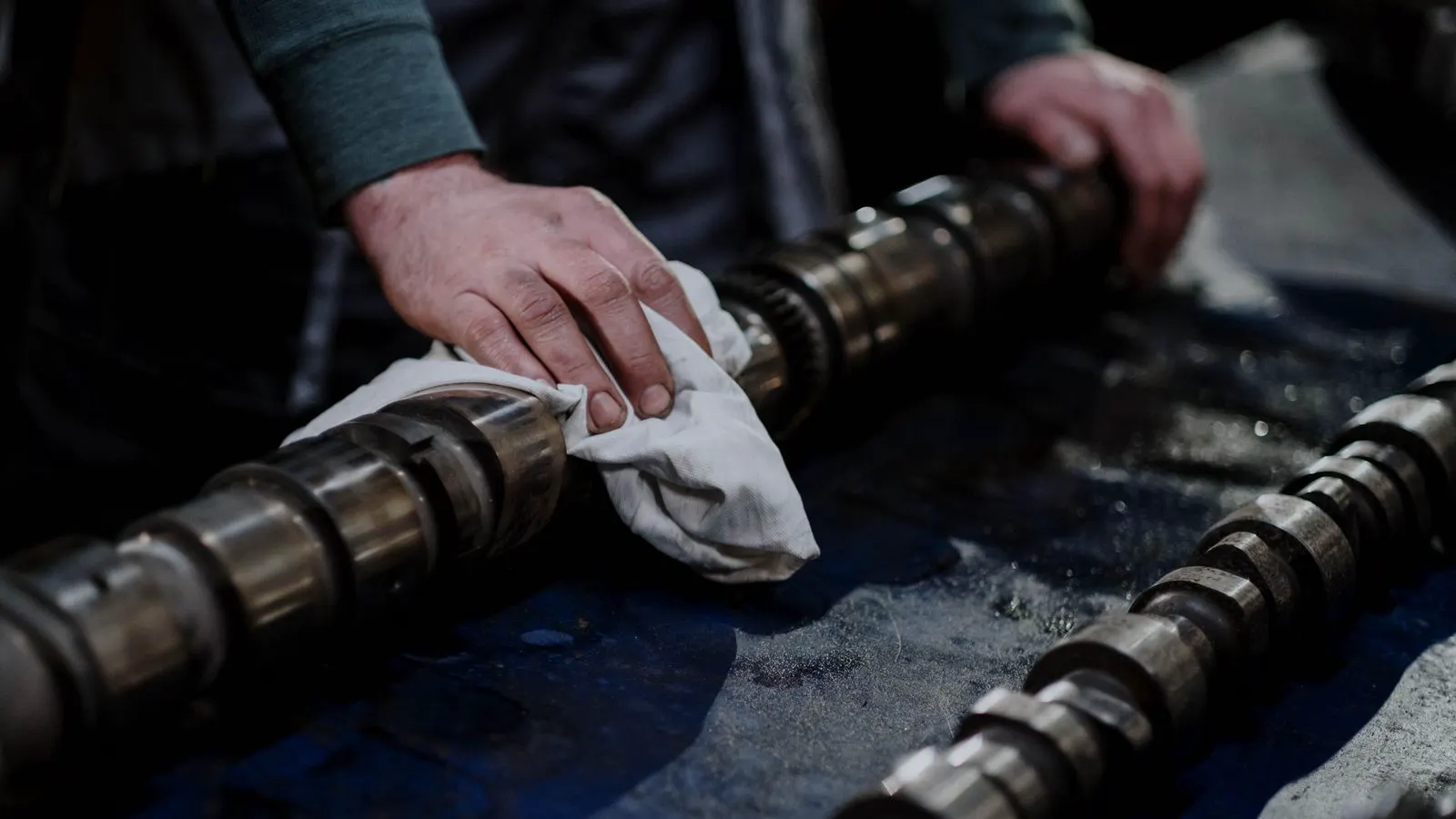
After support removal, parts are still covered in loose powder or build residue. For metals, this is typically done in a tumbling chamber with abrasive media or in a washing tank. For polymers, parts may be washed in isopropanol or another suitable solvent. Proper cleaning is essential for accurate inspection and for any subsequent heat treatment or surface finishing.
Heat Treatment
Heat treatment is one of the most important steps in metal additive post processing. It reduces residual stress that builds up during the layer-by-layer build process and can improve mechanical properties such as yield strength and ductility. The specific temperature profile and atmosphere depend on the alloy. For example, aluminum parts often require a solution heat treat, while steel parts may require a tempering cycle.
Surface Finishing
Surface finishing includes grinding, polishing, or machining to achieve the final surface texture and dimensional accuracy. In many industrial applications, printed parts are not used as-is. They may require machining of critical surfaces to ensure tight tolerances. This step can also improve the surface finish for cosmetic or functional reasons, such as reducing friction or improving corrosion resistance.
How Post Processing Affects Sourcing Decisions
When sourcing industrial 3D printed parts, buyers should not focus only on the printer technology or the material grade. The post-processing plan is equally important. Different suppliers may use different cleaning methods, heat treatment protocols, or finishing techniques. These differences directly affect the final quality of the part.
For example, a supplier that uses a high-precision laser for support removal may deliver a part with less surface damage than one that uses manual cutting. Similarly, a supplier that performs a custom heat treatment cycle tailored to the specific alloy may provide better mechanical consistency than one that uses a generic profile.
Buyers should ask suppliers to document their post-processing workflow. This includes the type of support removal method, the cleaning process, the heat treatment parameters, and any finishing operations. Requesting test reports or material certificates can help verify that the part meets the required specifications.
A Worked Example in Plain Words
Imagine a buyer needing a complex titanium bracket for a medical device. The part is printed using a powder bed metal printer. After the build, the bracket is still attached to a support structure and covered in fine titanium powder.
First, the support is removed using a precision laser, which minimizes damage to the delicate features of the bracket. Next, the part is cleaned in a tumbling chamber with ceramic beads to remove all loose powder. This ensures that no contaminant remains before the next step.
The bracket then undergoes heat treatment in a controlled furnace. This cycle reduces internal stress and stabilizes the material, ensuring that the part will not warp or crack during use. Finally, the bracket is inspected with coordinate measuring machine software to verify that all critical dimensions are within tolerance. The surface is then polished to remove any remaining roughness from the build.
This sequence of steps transforms a raw printed object into a reliable, inspection-ready component that meets the strict requirements of the medical industry.
Common Challenges in Additive Post Processing
Despite its importance, additive post processing presents several challenges. One major issue is the risk of damaging the part during support removal or cleaning. Complex geometries with thin walls or overhangs are particularly vulnerable.
Another challenge is achieving consistent heat treatment across different part shapes. A large, dense part may heat and cool differently than a small, thin component. This can lead to uneven mechanical properties if the process is not carefully controlled.
Finally, surface finishing can be time-consuming and expensive. For high-volume production, automating these steps is essential to keep costs manageable. Buyers should evaluate whether a supplier has the capacity to handle the required volume without compromising quality.
How to Specify Post Processing in Your Request for Quotation
When writing a request for quotation, be explicit about your post-processing requirements. Do not simply ask for a “finished part.” Instead, specify the following:
- The required surface finish, including roughness values and any visible surface defects that are unacceptable.
- The mechanical property requirements, such as yield strength or elongation, and whether a specific heat treatment is required.
- The dimensional tolerances for critical features, and whether additional machining is needed.
- The inspection method, such as coordinate measuring, CT scanning, or dye penetrant testing.
- Any material certification or traceability requirements.
By providing these details upfront, you can receive more accurate quotes and avoid costly rework later in the process.
Final Thoughts
Additive post processing is a critical part of the industrial 3D printing workflow. It includes a range of steps, from support removal and cleaning to heat treatment and surface finishing. Each step plays a role in determining the final quality and performance of the part.
For industrial buyers, understanding these steps is essential for making informed sourcing decisions. By clearly defining your post-processing requirements and asking suppliers to document their workflows, you can ensure that your parts meet the highest standards of quality and reliability.
Frequently asked questions
Is additive post processing always required for 3D printed parts?
Yes, most industrial parts require some form of post-processing to remove supports, clean the surface, and achieve the required mechanical properties.
What is the difference between AM post processing and traditional machining?
AM post processing typically involves removing supports, cleaning, and heat treating the part as a whole. Traditional machining usually involves removing material from a solid block to create the part.
How does heat treatment affect the quality of a metal AM part?
Heat treatment reduces residual stress and can improve mechanical properties such as strength and ductility, making the part more reliable for load-bearing applications.
Can post-processing be automated for high-volume production?
Yes, support removal, cleaning, and heat treatment can be automated to improve consistency and reduce labor costs in high-volume manufacturing.
What should I ask a supplier about their post-processing capabilities?
You should ask for details on their support removal method, cleaning process, heat treatment parameters, and inspection procedures to ensure the part meets your specifications.