Buyers Guide: Selecting Laser Annealing for Metal AM
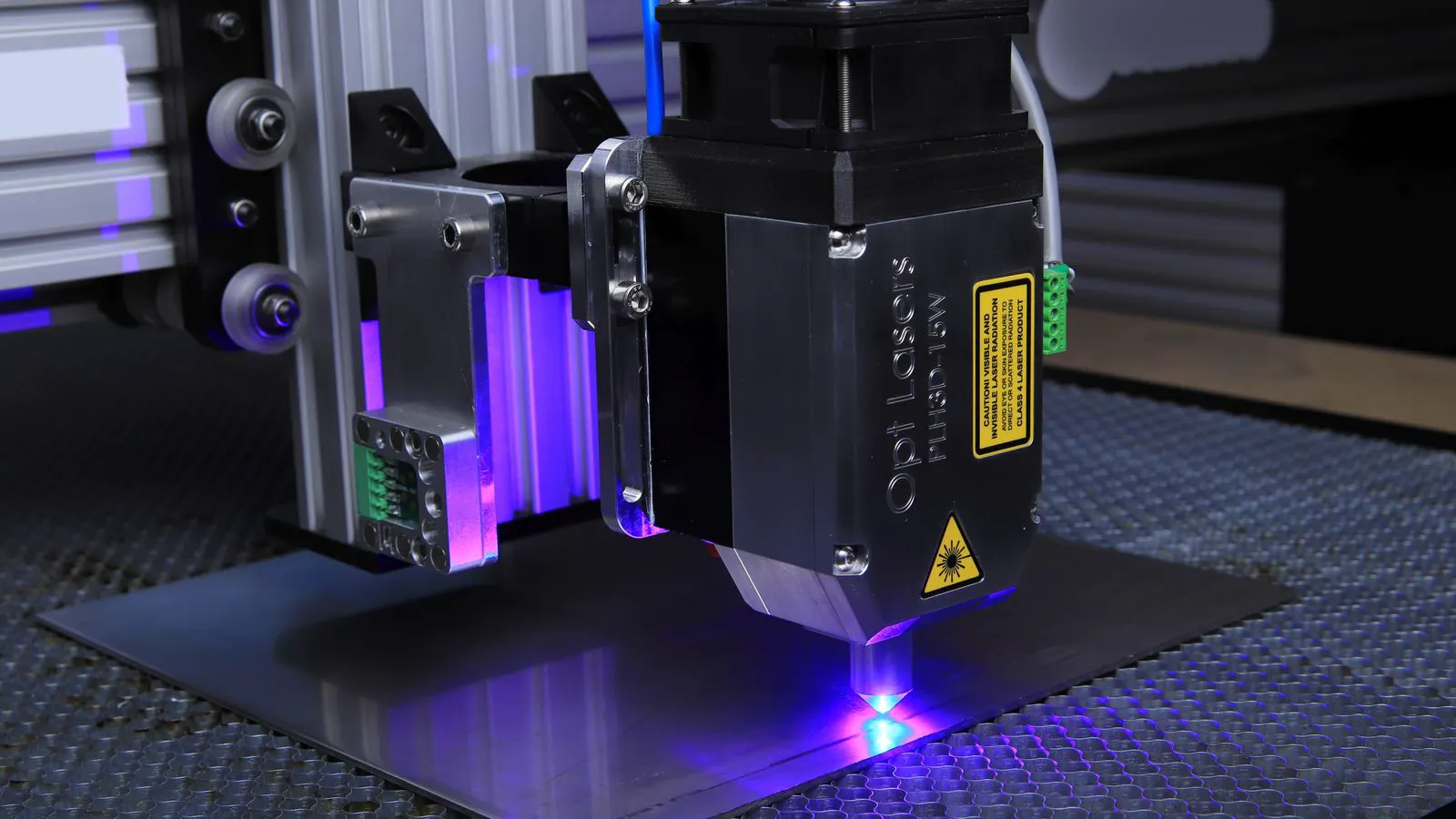
Laser annealing is a selective heat treatment for metal AM parts that reduces residual stress and improves surface finish. This guide outlines how to evaluate equipment and services, including power stability, process control, and compatibility with your alloy and part geometry.
- Laser annealing is a selective, low-energy heat treatment designed to reduce residual stress and improve surface finish without significant dimensional change.
- Equipment selection requires attention to laser power stability, scanning speed control, and thermal monitoring capabilities to ensure repeatable results.
- Service providers should offer validated process parameters for specific alloys and part geometries, with clear documentation of heat-affected zone limits.
- Combine laser annealing with other 3d printing finishing steps, such as sandblasting or polishing, to achieve the final required surface quality and mechanical properties.
What is laser annealing for metal AM parts?
Laser annealing is a post-processing technique that uses focused laser energy to heat specific areas of a metal additive manufacturing part to a controlled temperature. Unlike full-volume heat treatment, laser annealing applies heat only to the surface or near-surface regions. This targeted approach is used to reduce residual stresses that form during the layer-by-layer build process, improve surface finish, and enhance local mechanical properties.
For professional buyers, laser annealing is not a one-size-fits-all solution. Its value depends on the specific alloy, part geometry, and performance requirements. This guide explains how to evaluate both standalone laser annealing equipment and outsourced laser annealing 3d printing services to make an informed purchasing decision.
When should you choose laser annealing over other finishing methods?
The decision to use laser annealing depends on the primary goal of your post-processing step. If your main objective is to reduce high residual stresses across an entire part, conventional heat treatment may be more appropriate. If you need to improve surface finish and reduce microstructural defects in specific high-stress areas, laser annealing offers a more controlled solution.
Laser annealing is particularly useful when:
- You need to reduce residual stress in thin-walled or complex geometries where full heat treatment risks distortion.
- You want to improve surface finish and reduce the presence of sandblasting-related defects on critical surfaces.
- You require selective treatment, such as annealing only the top surface of a part to reduce surface roughness while leaving the core microstructure unchanged.
- You are producing small-batch or high-value parts where the cost of full heat treatment is disproportionate to the part value.
For metal part finishing, laser annealing often complements other processes. It is frequently used in combination with sandblasting, polishing, or shot peening to achieve the final surface quality and mechanical properties required by your application.
Key equipment and service criteria for evaluation
When selecting laser annealing equipment or a service provider, you must evaluate several technical and operational criteria. The table below outlines what to look for and why each criterion matters for your production line.
| Criterion | What to look for | Why it matters |
|---|---|---|
| Laser Power and Stability | Continuous or pulsed laser with stable power output and precise control over energy density | Ensures consistent annealing across multiple parts and prevents localized overheating or under-treatment |
| Scanning Speed and Pattern Control | Ability to adjust scan speed, hatch distance, and scan pattern (raster, spiral, etc.) | Critical for controlling the thermal input and heat-affected zone depth based on part geometry and alloy |
| Thermal Monitoring and Control | Integrated thermocouples, infrared sensors, or closed-loop temperature feedback | Prevents thermal damage, ensures the material reaches the correct annealing temperature, and provides process documentation |
| Compatibility with Alloys | Proven process parameters for your specific metal, such as maraging steel, titanium, or aluminum alloys | Avoids material degradation and ensures the desired microstructural changes without introducing new defects |
| Integration and Automation | Ability to integrate with existing AM cells or workstations, with automated part loading/unloading | Reduces cycle time, minimizes human error, and supports high-volume production environments |
| Documentation and Traceability | System generates detailed logs of laser parameters, scan paths, and thermal data | Essential for quality assurance, regulatory compliance, and troubleshooting in professional manufacturing |
How to assess laser annealing service providers
If you are outsourcing rather than purchasing equipment, evaluating a service provider requires a different approach. You are buying a validated process, not just machine time.
- Ask for alloy-specific process data. A reputable provider should have developed and validated laser annealing parameters for the exact alloys you use. Ask for data sheets that specify energy density, scan speed, and resulting stress reduction or surface finish improvements.
- Require a sample part evaluation. Send a representative part or a coupon from a previous build. Ask the provider to perform a trial run and deliver the part with full documentation of the parameters used and post-processing measurements.
- Clarify the scope of 3d printing finishing. Ensure you understand what is included in the laser annealing service. Does it include pre-cleaning, post-cooling, or additional surface preparation? Are there separate charges for testing, such as X-ray or CT scans, to verify internal quality?
- Review their quality management system. Ask about their certifications and how they handle non-conforming parts. A professional provider should have a clear process for documenting deviations and implementing corrective actions.
Practical considerations for your production environment
Before finalizing your selection, consider how laser annealing fits into your existing workflow.
- Part handling: Laser annealing requires precise part positioning. Evaluate whether the equipment or service provider can handle parts with varying sizes and shapes without extensive fixture work.
- Cooling requirements: The laser annealing process is often followed by controlled cooling to minimize thermal shock. Ensure the provider or equipment has a defined cooling protocol.
- Surface preparation: Laser annealing can be sensitive to surface condition. A part with significant scale, oxide, or debris may require cleaning before treatment. Factor this into your total cost and cycle time.
- Space and utility: If purchasing equipment, assess the space requirements, power supply, and fume extraction needs. Laser systems generate fumes when treating certain alloys, so proper ventilation is critical.
A decision checklist for purchasing laser annealing
Use the following checklist to guide your final decision. Ensure you have answers to each question before proceeding to a purchase or service contract.
- Have I defined the primary goal of the annealing process (stress reduction, surface finish, or both)?
- Do I have validated laser parameters for my specific alloy and part geometry?
- Can the equipment or provider provide full traceability documentation for each part treated?
- Have I included the cost of pre-processing, cooling, and post-treatment inspection in my budget?
- Does the solution integrate with my existing 3d printing finishing workflow without creating bottlenecks?
- Have I tested the process on a representative part and verified the results meet my quality criteria?
Selecting the right laser annealing solution is a strategic decision that impacts both part quality and production efficiency. By focusing on process validation, equipment stability, and integration with your broader metal part finishing strategy, you can ensure that laser annealing delivers tangible benefits to your metal AM production.
Frequently asked questions
Does laser annealing change the dimensions of a metal AM part?
Laser annealing is designed to cause minimal dimensional change because it is a localized, low-energy process. However, minor thermal expansion and contraction can occur, so critical dimensions should be verified after treatment.
Can laser annealing be used on all metal alloys?
While laser annealing is effective for many common AM alloys like titanium and maraging steel, its suitability depends on the specific material. Some alloys may require different parameters or may not benefit significantly from the process. Always validate with a trial run.
How does laser annealing compare to conventional heat treatment for stress reduction?
Conventional heat treatment treats the entire part uniformly, which is effective for bulk stress relief but can cause distortion. Laser annealing is selective, allowing stress reduction in specific areas without affecting the overall geometry, making it ideal for complex or thin-walled parts.
What is the typical lead time for laser annealing services?
Lead times vary based on part size, batch quantity, and provider workload. Simple parts may be processed within hours, while larger batches or complex geometries may take several days. Always confirm lead times with your service provider.
Is laser annealing a substitute for other metal part finishing processes?
No, laser annealing is a complementary process. It is often used alongside sandblasting, polishing, or heat treatment to achieve the final required surface finish, dimensional accuracy, and mechanical properties for a given application.