Outlook: AM Post-Processing Automation Trends
Additive post-processing automation is shifting from manual cleanup to integrated, data-driven finishing lines. Buyers should plan for robotic support removal, automated thermal cycles, in-line inspection, and software that ties AM output to final assembly. Preparation requires standardizing part design, mapping cycle times, and piloting one high-volume part family.
- Automation in AM post-processing is moving from single-task cells to integrated finishing lines that connect support removal, cleaning, heat treatment, and inspection.
- Buyers should plan for software that links machine data to quality records, not just for robots that move parts.
- Part design for post-processing will become a core engineering responsibility, not a late-stage cleanup step.
- Pilot one high-volume part family before committing to full-line automation.
- Cost savings come from cycle-time reduction and fewer rework loops, not only from labor replacement.
Why AM finishing is becoming a system, not a step
Metal AM and SLS have always required post-processing. The difference now is that finishing is no longer a series of isolated tasks done by a small team at the end of production. It is becoming a connected sequence of operations, each one feeding data into the next.
A typical metal AM part may require support removal, stress-relief annealing, deburring, surface preparation, dimensional inspection, and final machining. A typical SLS part may require support removal, surface cleaning, dyeing or coating, and inspection. In both cases, the final state of the part depends on how well the post-processing sequence is controlled.
Buyers are starting to treat post-processing as a system they design and optimize, the way they design the print itself.
What additive post-processing automation will look like next
The next phase of AM finishing is not simply replacing hands with robots. It is removing the guesswork from sequence, timing, and quality.
Three shifts are visible across industrial shops:
-
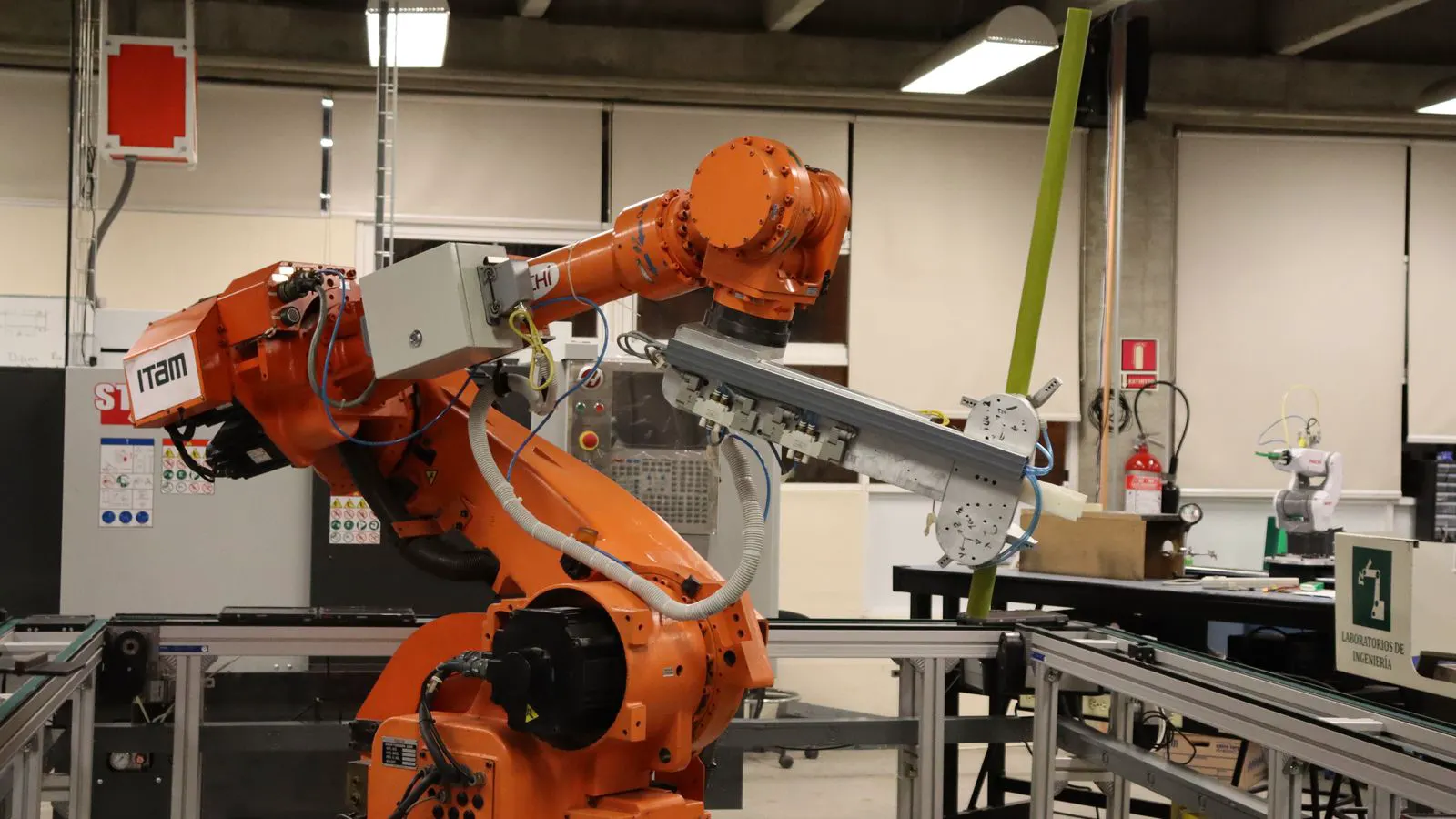
Support removal is becoming a separate, controlled operation. In metal AM, support removal has traditionally been manual or semi-manual, often done by trained operators with cutting tools. Automation here is moving toward dedicated cells where robotic arms identify support structures, cut them, and verify that no residual material remains on the part. In SLS, automated support removal is already common in high-volume lines, and the trend is toward tighter integration with part handling.
-
Thermal cycles are becoming automated and traceable. Heat treatment is one of the most critical steps in metal AM. It controls residual stress, microstructure, and final mechanical properties. Automated heat treatment means parts move from the printer into a controlled furnace or induction system, with the thermal profile recorded and linked to the part’s batch or serial number. Buyers should expect software that pulls the AM build file and selects the correct thermal profile automatically.
-
Inspection is moving earlier and becoming continuous. Instead of waiting until the part is fully finished to check dimensions, shops are adding in-line inspection at multiple points. A part may be checked after support removal, after heat treatment, and after machining. Automated optical inspection, CMM scanning, and laser triangulation are being used to capture surface data and compare it against digital models. The output is not just a pass or fail flag. It is a dataset that can be used to adjust downstream operations.
How automation changes the post-processing cost structure
Additive post-processing automation does not reduce cost by removing every operator. It reduces cost by shortening cycle times, cutting rework, and improving first-pass yield.
| Post-processing operation | Manual or semi-automatic baseline | Automated approach | Typical cost impact area |
|---|---|---|---|
| Support removal | Operator cuts or breaks supports with hand tools | Robotic cutting or automated support removal cell | Labor time, consistency, part damage risk |
| Surface cleaning | Manual scrubbing or solvent baths | Automated wash lines or dry cleaning | Throughput, chemical handling, operator exposure |
| Heat treatment | Manual loading, batch tracking by log | Automated transfer, sensor-controlled cycles | Cycle time, traceability, energy use |
| Inspection | CMM or manual measurement after finishing | In-line automated optical or laser inspection | Rework loops, inspection bottleneck, data capture |
| Final machining | Manual setup and tool selection | Integrated AM-to-CNC handoff with pre-programmed toolpaths | Setup time, operator skill dependency |
The cost impact is not uniform. For high-volume part families, automation pays back through reduced labor hours and fewer rejected parts. For low-volume, high-value parts, automation may not replace manual work. Instead, it removes the most error-prone steps and gives operators time to focus on setup and exception handling.
A common mistake is to buy a robot for support removal without changing the part design. If the supports are placed in a way that makes them difficult to identify or remove, the robot will slow down or fail. The automation assumes a certain level of design consistency.
What buyers should prepare in part design
Additive post-processing automation depends on part design. If parts are designed without regard for downstream handling, no amount of automation will fully compensate.
Buyers should review their part design guidelines and add explicit post-processing requirements. These should cover:
- Support placement strategy. Supports should be positioned to allow clean removal and to minimize surface damage. For metal AM, this often means placing supports in areas where the part will be machined or where surface roughness is less critical.
- Surface finish requirements. If a part will receive coating or anodizing, the surface must be cleaned to a specific standard before that step. Automation can hold the part to that standard, but only if the AM process produces a surface that is within the expected range.
- Thermal sensitivity. Some parts require stress-relief annealing before machining. If the AM build file does not include the correct material and orientation, the post-processing sequence may produce a part that cracks or warps during machining.
- Inspection access. Automated optical inspection needs clear access to critical surfaces. If a part has deep recesses or internal cavities that block the sensor, the inspection system will flag the part as defective even if the part is good.
- Handling features. Parts that move through multiple post-processing stations need consistent handling points. This may mean adding temporary fixturing features, designing for clamping, or ensuring that the part geometry allows a robotic gripper to hold it without deformation.
The practical step is to create a post-processing design checklist that engineering and AM process engineers both sign off on before a part is released for production.
How to pilot automation without overcommitting
Most industrial shops should not try to automate the entire post-processing line at once. The risk is too high, and the integration complexity is greater than most teams expect.
A better approach is to pilot one operation on one part family.
A good pilot candidate is a part family that has:
- High annual volume, so cycle-time savings matter.
- Repetitive geometry, so the automation can learn a consistent pattern.
- A post-processing step that is currently labor-intensive or error-prone.
- A clear quality gate, so the success of the pilot can be measured.
For example, a shop producing titanium or nickel alloy brackets may pilot automated support removal. The brackets have a consistent support pattern, the supports are in the same location every build, and the part is then moved to heat treatment and machining. If the support removal cell can reduce cycle time by a meaningful margin and reduce support-related defects, the case for expanding automation is strong.
The pilot should include software integration. The AM build file should feed the support removal cell, which should feed the thermal treatment log, which should feed the inspection record. If the data does not flow, the automation is just a faster manual step.
A practical pilot plan:
- Select one part family and map the current post-processing sequence. Measure cycle time, labor hours, defect rate, and rework frequency.
- Identify the highest-value step to automate. This is usually the step with the longest cycle time or the highest defect rate.
- Run the selected step through a small-scale automation cell. Keep the rest of the line manual.
- Measure the results against the baseline. Look for cycle-time reduction, defect reduction, and data capture quality.
- Expand only if the pilot meets the defined thresholds.
What the post-processing team will look like in two years
The post-processing team will not disappear. It will change.
Today, a post-processing operator may spend most of the day cutting supports, loading furnaces, and manually inspecting parts. In the next phase, the operator will focus on exception handling, cell setup, and data review.
The new post-processing engineer will need skills in:
- AM process parameters and their effect on support removal and surface quality.
- Basic robotics and cell integration, enough to diagnose a gripper failure or a sensor misalignment.
- Quality data analysis, enough to spot a trend in surface roughness or dimensional drift before it becomes a batch failure.
- Thermal processing, enough to understand why a part failed in heat treatment and whether the AM build file or the furnace profile caused it.
Organizations that treat post-processing as a separate, low-skill function will find it difficult to staff and maintain automated lines. The post-processing team is becoming a process engineering function, and it should be staffed and trained accordingly.
What to do now
Buyers and engineers should not wait for automation to arrive before planning. The preparation work starts now.
Three actions make the most sense:
-
Map the current post-processing workflow for your top five part families. Record cycle times, labor hours, defect rates, and the most common rework reasons. This baseline will tell you where automation will pay off.
-
Review part design for post-processing compatibility. Work with your AM process team to define support placement, surface finish, and handling requirements that support automated operations.
-
Pilot one automation step on one part family. Keep the scope small. Measure the results. Expand only when the data supports it.
Additive post-processing automation is not a single purchase. It is a sequence of changes in design, process, software, and staffing. The shops that prepare now will be able to integrate automation step by step, with clear ROI at each stage. The shops that wait will find that their existing manual processes are harder to scale, and their post-processing costs will continue to rise as part volumes grow.
Frequently asked questions
Can additive post-processing automation replace all manual post-processing labor?
No. Automation will reduce manual labor for repetitive tasks such as support removal and part handling, but operators are still needed for setup, exception handling, and quality review. The role shifts from manual execution to process supervision.
What part families are best suited for early post-processing automation?
High-volume part families with consistent geometry and a post-processing step that is currently labor-intensive or error-prone. Examples include brackets, housings, and structural components that go through support removal, heat treatment, and machining every build.
Do I need to redesign my parts before adding automation to post-processing?
Often, yes. Parts designed without post-processing in mind may have supports that are difficult to remove, surfaces that do not meet inspection standards, or handling features that do not work with robotic grippers. A post-processing design review is usually necessary before automation can be effective.
How long does it take to see cost savings from additive post-processing automation?
It depends on the part family, the automation step, and the current baseline. High-volume part families with long support removal or heat treatment cycles may see cycle-time savings within the first few months. Full-line integration and broader cost reduction take longer.
Is automated support removal more mature for metal AM than for SLS?
SLS has a longer history of automated support removal because powder and support structures are handled differently in the build process. Metal AM support removal is moving toward dedicated robotic cells, but it is generally less standardized across materials and printer types.